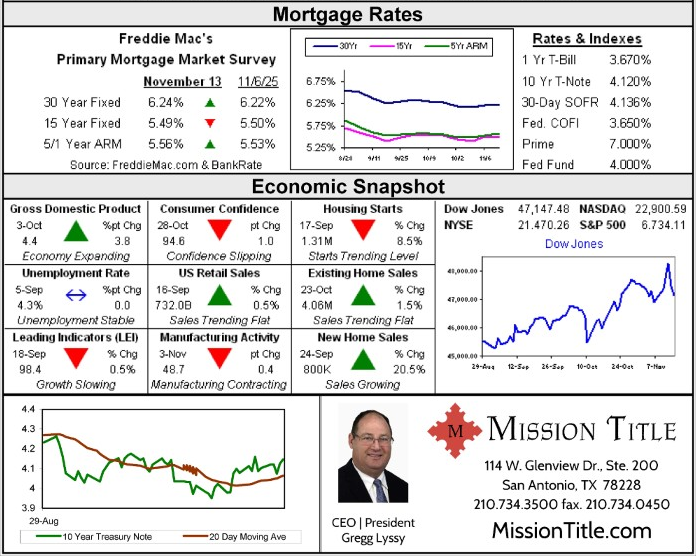
After last week’s marginal employment data, the market is entirely pricing in a rate cut from the Fed at
its next meeting. Despite the President’s recent firing of the head of the Bureau of Labor Statistics
(BLS), the outlook for the labor market continued to dim. Last month, only 22,000 new jobs were
created, below the expectations of 75,000. And while July saw 6,000 jobs added to its tally, June was
adjusted to a loss of 13,000 positions, the first monthly loss since December 2020. The number of job
openings also dipped near pandemic levels, while both weekly and continuing jobless claims notched
slightly higher. While the ISM indexes managed to increase, mortgage rates slipped downward.
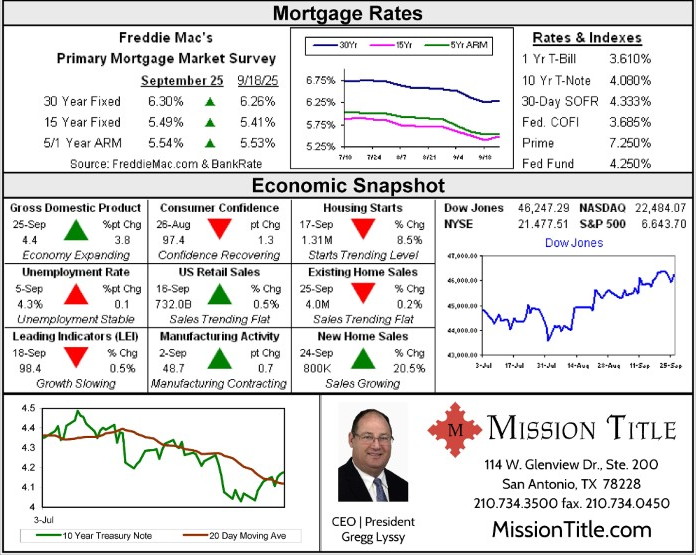
After last week’s marginal employment data, the market is entirely pricing in a rate cut from the Fed at
its next meeting. Despite the President’s recent firing of the head of the Bureau of Labor Statistics
(BLS), the outlook for the labor market continued to dim. Last month, only 22,000 new jobs were
created, below the expectations of 75,000. And while July saw 6,000 jobs added to its tally, June was
adjusted to a loss of 13,000 positions, the first monthly loss since December 2020. The number of job
openings also dipped near pandemic levels, while both weekly and continuing jobless claims notched
slightly higher. While the ISM indexes managed to increase, mortgage rates slipped downward.

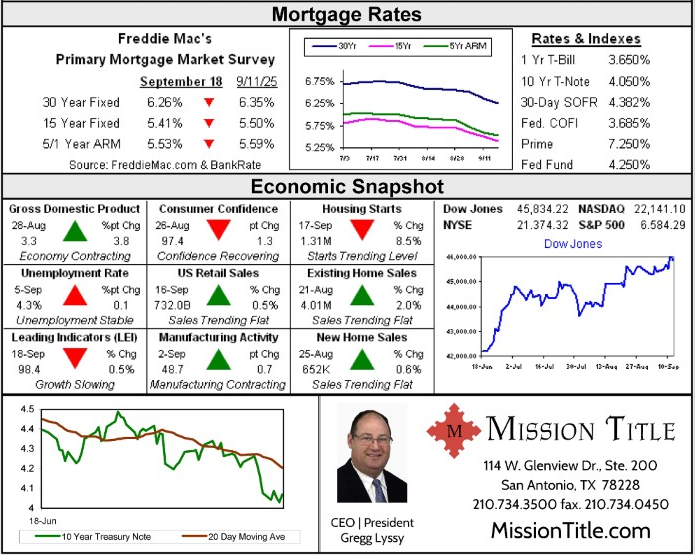
After last week’s marginal employment data, the market is entirely pricing in a rate cut from the Fed at
its next meeting. Despite the President’s recent firing of the head of the Bureau of Labor Statistics
(BLS), the outlook for the labor market continued to dim. Last month, only 22,000 new jobs were
created, below the expectations of 75,000. And while July saw 6,000 jobs added to its tally, June was
adjusted to a loss of 13,000 positions, the first monthly loss since December 2020. The number of job
openings also dipped near pandemic levels, while both weekly and continuing jobless claims notched
slightly higher. While the ISM indexes managed to increase, mortgage rates slipped downward.
After last week’s marginal employment data, the market is entirely pricing in a rate cut from the Fed at
its next meeting. Despite the President’s recent firing of the head of the Bureau of Labor Statistics
(BLS), the outlook for the labor market continued to dim. Last month, only 22,000 new jobs were
created, below the expectations of 75,000. And while July saw 6,000 jobs added to its tally, June was
adjusted to a loss of 13,000 positions, the first monthly loss since December 2020. The number of job
openings also dipped near pandemic levels, while both weekly and continuing jobless claims notched
slightly higher. While the ISM indexes managed to increase, mortgage rates slipped downward.
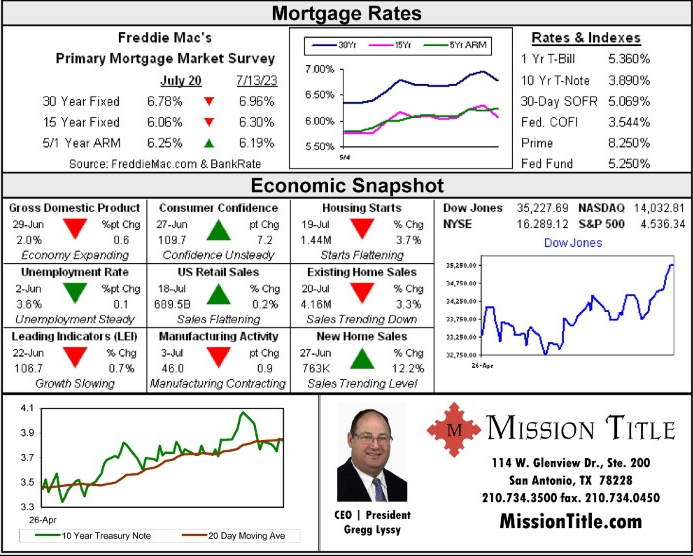
Mortgage rates continued to press downward last week after the previous week’s CPI data pointed to
easing inflationary pressures. Only a few weeks ago, the market was expecting the Federal Reserve to
raise rates by another half-point at its meeting that takes place on Tuesday and Wednesday. Now
markets are universally convinced that the Fed will only raise rates by one-quarter of a point. Retail
Sales and Industrial Production also helped generate downward pressure by coming under
expectations. While many economists believe that the economy is cooling off, inflation still remains
above the Fed’s target rate, and the job market remains very hot.
| Mon | Tue | Wed | Thu | Fri | Sat | Sun |
|---|---|---|---|---|---|---|
| 1 | 2 | 3 | 4 | 5 | 6 | 7 |
| 8 | 9 | 10 | 11 | 12 | 13 | 14 |
| 15 | 16 | 17 | 18 | 19 | 20 | 21 |
| 22 | 23 | 24 | 25 | 26 | 27 | 28 |
| 29 | 30 | |||||
 Loading ...
How Is My Site?
Total Voters: 3
Loading ...
COVERAGE AREA: Atascosa, Bandera, Bexar, Chambers, Comal, De Witt, Dimmit, Frio, Gonzales, Guadalupe, Karnes, Kendall, Kinney, La Salle, Live Oak, McMullen, Medina, Uvalde, Wilson, Webb, Zavala, Zapata
© 2025 copyright MISSION TITLE, LP All rights reserved